
Crying is generally compatible with wearing contact lenses. ACUVUE’s wearer guidance says you can cry in contacts while avoiding rubbing the eyes or wiping the eye itself with tissues. This does not mean pain, a displaced lens or persistent irritation should be ignored.
What happens to your lenses when you cry?
Your lenses are already worn against the eye’s tear film. Crying is different from exposing them to shower or swimming water. You do not need to treat ordinary tears as a reason to replace an otherwise comfortable lens immediately, but rubbing or handling the eyes can disturb a lens.
Do not rub your eyes or try to reposition a lens by force. If vision remains blurred or the lens feels uncomfortable, remove it using the handling method you were taught. If you cannot remove it normally, seek professional help rather than following an improvised eyelid maneuver.
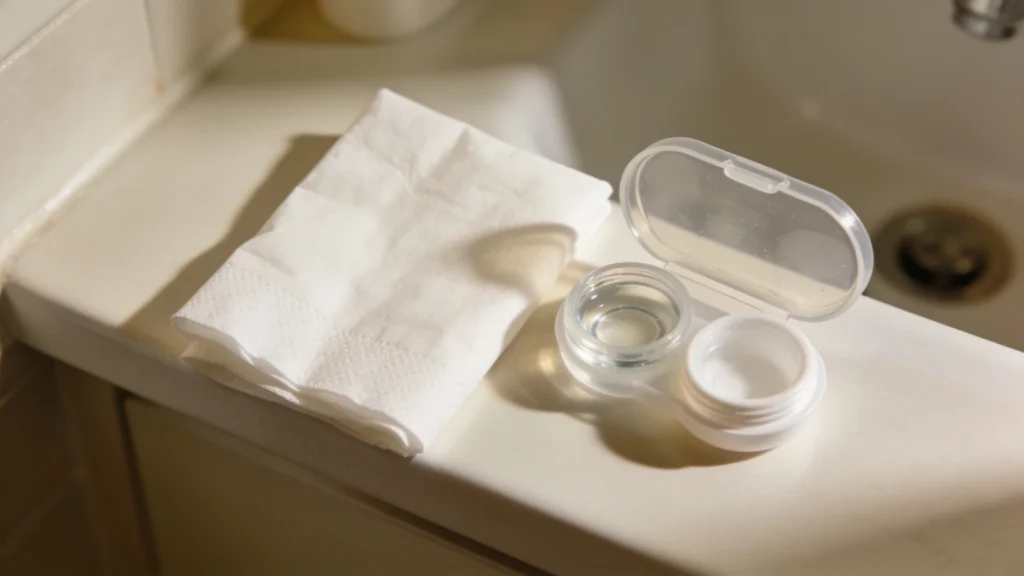
If a lens comes out, a rinse is not enough
Wash and dry your hands before handling a lens. Discard a fallen daily disposable lens. It is a single-use product, not a reusable lens you can clean for another wear.
For a reusable lens, do not rinse it and immediately put it back in. Use the prescribed full cleaning and disinfection procedure before reinsertion; discard it if damaged, dried out or if you cannot complete the appropriate care. CooperVision’s wearer guide advises discarding a dried-out lens and avoiding rubbing the eyes.
Never rinse a fallen lens with tap water or saliva. Saline alone does not disinfect. A peroxide solution requires full neutralization in its specified case and must not be used as a quick pre-insertion rinse. See the solution replacement and disinfection guide for product-specific directions.
Do you need to clean lenses after crying?
Continue the prescribed wearing and care schedule rather than inventing a special replacement interval for tears. If you remove daily disposables, discard them. Reusable lenses need their usual complete cleaning, disinfection and storage routine after removal.
For ongoing dryness, ask which drops are appropriate for your lens type; a cleaning solution is not an eye-drop substitute. Our solution versus rewetting-drop guide explains that distinction.
If redness, pain, light sensitivity or changed vision continues after crying, stop wearing the lenses and contact an eye care professional.
